Vikings and Early Explorers: The First Europeans in Canada
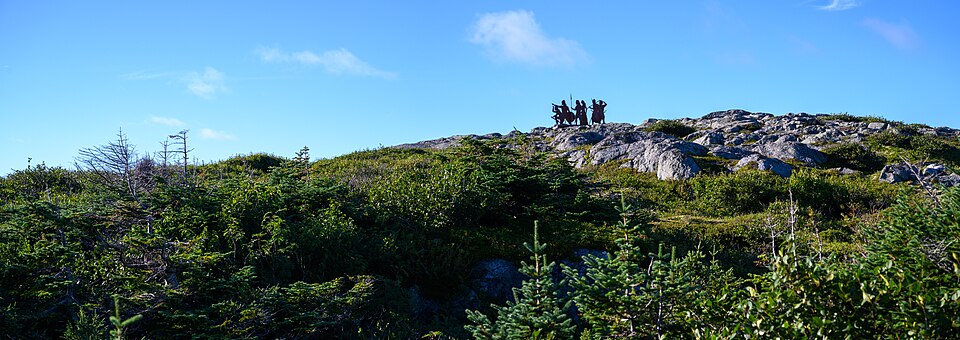
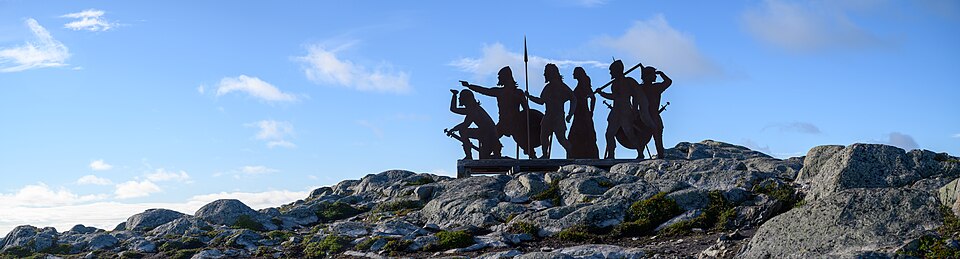
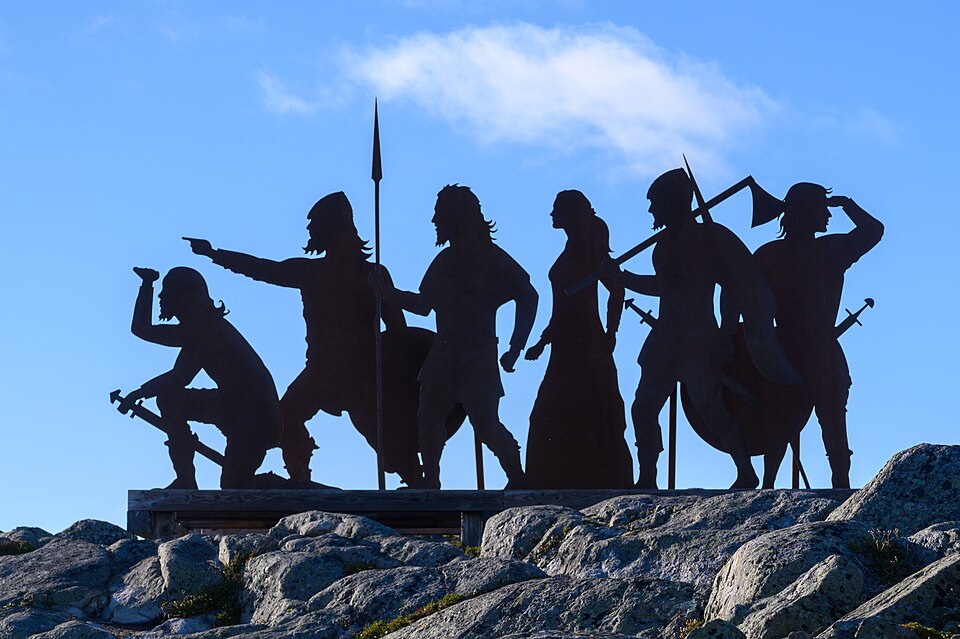
Five hundred years before Columbus, sailors from the far north of Europe were already building houses on the shore of Newfoundland. The Vikings came, worked, and left — and for almost a thousand years, nobody could prove they had ever been there. Then, in 1960, a Norwegian explorer and his archaeologist wife found the proof in a grassy meadow at the tip of the Great Northern Peninsula. Canada's story of European contact begins not in 1492, but around the year 1000.
In short
The first Europeans known to have reached Canada were Norse sailors from Greenland, who built a base at L'Anse aux Meadows in Newfoundland around the year 1000 — carbon dating gives 990–1050, and a 2021 tree-ring study pinpointed Norse activity to 1021. It is the only undisputed Norse site in North America outside Greenland, and the earliest evidence of Europeans in Canada. The Norse stayed only a few years. Five centuries later, John Cabot reached Newfoundland for England in 1497, and Jacques Cartier claimed the land for France in 1534, hearing the Iroquoian word 'kanata' — village — that would give Canada its name.
The Norse cross the Atlantic
By the late 900s, Norse settlers from Iceland had built farms in Greenland, and from Greenland the sea road west was short. According to the Icelandic sagas, written down in the 13th century, Leif Erikson — son of Erik the Red, who had settled Greenland — sailed south past lands he called Helluland and Markland to a place he named Vinland, a land of wild grapes and rich grass. For centuries, historians treated the sagas as half legend. Then the archaeology caught up.
In 1960, the Norwegian explorer Helge Ingstad and his wife, the archaeologist Anne Stine Ingstad, followed a local fisherman's tip to a meadow called L'Anse aux Meadows, near the village of the same name at the tip of Newfoundland's Great Northern Peninsula. Under the grass they found the outlines of eight buildings: three large halls, smaller houses, and a smithy with a furnace for smelting bog iron. More than 800 Norse objects were found, including a bronze cloak pin of a type worn in the 10th and 11th centuries, boat nails, and wood chips from carpentry. It was, beyond doubt, a Norse site — the first authenticated one in North America.
The site was probably a base camp, not a farm. There were no barns or byres, and the middens are small. The crew — perhaps 70 to 90 people — repaired boats, smelted iron, and explored south. Butternuts found in the bog came from trees that grow far to the south, which means the Norse travelled well down the coast, into the lands the sagas called Vinland. In 2021, a team led by Margot Kuitems used a spike in radiocarbon caused by a cosmic-ray event in 993 to date wood cut at the site to exactly 1021 — the earliest exact date for a European presence in the Americas. The camp was used for about a decade, then abandoned. Why they left is unknown: conflict with Indigenous peoples, the long supply line to Greenland, or simply that the place was never meant to last.
Why the Norse matter
L'Anse aux Meadows was designated a National Historic Site of Canada in 1968 and a UNESCO World Heritage Site in 1978. It matters for two reasons. First, it proves that Europeans reached the Americas five centuries before Columbus — the story of contact is much older than 1492. Second, it shows what the Norse did not do: they did not stay, they did not found a colony, and they left almost no trace on the peoples already living there. Indigenous peoples had used that same shore for some 6,000 years before the Norse arrived, and they kept using it long after.
Parks Canada, which manages the site today, tells both stories side by side: the Norse camp and the much longer Indigenous history of the place. Visitors can walk the reconstructed sod buildings, watch a smith work iron the Norse way, and stand on the same terrace where, a thousand years ago, sailors from Greenland looked south toward a continent they could not keep.
Cabot and the cod
For the next five hundred years, no European is known to have settled in Canada. Then, in 1497, the Italian sailor John Cabot — Giovanni Caboto — sailed from Bristol, England, under an English flag and reached the coast of Newfoundland. He found something more valuable than gold: seas so thick with cod that sailors said you could scoop the fish up in baskets. Within a few years, English, French, Portuguese, and Basque fishing fleets were crossing the Atlantic every summer to dry cod on the shores of Newfoundland, and the Grand Banks fishery became one of the great industries of the early modern world.
Cabot himself vanished on a second voyage in 1498, and his son Sebastian later claimed more than his father had done. But the fishery he opened changed Canada's history: it brought Europeans to the coast every year, it taught them the harbours and the people, and it made the northwest Atlantic a place European kings thought worth claiming. The seasonal fishing stations were the first European footprint on Canada's Atlantic shore — and they were built, used, and abandoned with the seasons, much like the Norse camp before them.
Cartier and the name Canada
In 1534, the French explorer Jacques Cartier sailed into the Gulf of St. Lawrence and planted a cross on the Gaspe Peninsula, claiming the land for King Francis I of France. He made three voyages between 1534 and 1542, sailing up the St. Lawrence River as far as the Iroquoian village of Stadacona — the site of present-day Quebec City — and on to Hochelaga, where Montreal stands today. Cartier was the first European to explore the St. Lawrence and to set eyes on those places.
Cartier also gave Canada its name, though not on purpose. He heard two captured guides speak the Iroquoian word 'kanata', meaning 'village' or 'settlement'. Cartier used it for the whole region, and by the 1550s the name 'Canada' was appearing on European maps. His attempt to found a permanent settlement — Fort Charlesbourg-Royal, built in 1541 near Quebec City — failed within a year, defeated by a harsh winter and conflict with the people of Stadacona. France would not return in force for another sixty years. But Cartier's voyages had done their work: the St. Lawrence was on the map, the name Canada was in use, and the next Frenchman to come would stay.
| Milestone | Date | What happened |
|---|---|---|
| Norse settle Greenland | c. 985 | Erik the Red founds the Greenland colonies |
| L'Anse aux Meadows built | c. 1000 (1021 dated) | Norse base camp in Newfoundland; eight buildings |
| Norse leave Newfoundland | c. 1010s | Camp abandoned after about a decade |
| L'Anse aux Meadows discovered | 1960 | Helge and Anne Stine Ingstad excavate the site |
| National Historic Site | 1968 | L'Anse aux Meadows designated by Canada |
| UNESCO World Heritage | 1978 | Site recognised for world importance |
| John Cabot reaches Newfoundland | 1497 | First English-backed voyage; cod fishery begins |
| Jacques Cartier's first voyage | 1534 | Claims the land for France; hears 'kanata' |
| Cartier reaches Stadacona and Hochelaga | 1535 | First European at Quebec City and Montreal sites |
| Charlesbourg-Royal fails | 1541–42 | First French settlement attempt abandoned |
| Tree-ring date for Norse activity | 2021 | Nature study dates wood cut at the site to 1021 |
Sources: Parks Canada, 'L'Anse aux Meadows National Historic Site'; Wikipedia, 'L'Anse aux Meadows'; Kuitems et al., Nature (2021); Discover Canada (Government of Canada); Encyclopaedia Britannica, 'Canada'. Checked 29 November 2026.