New France: Champlain, Quebec, and the Fur Trade
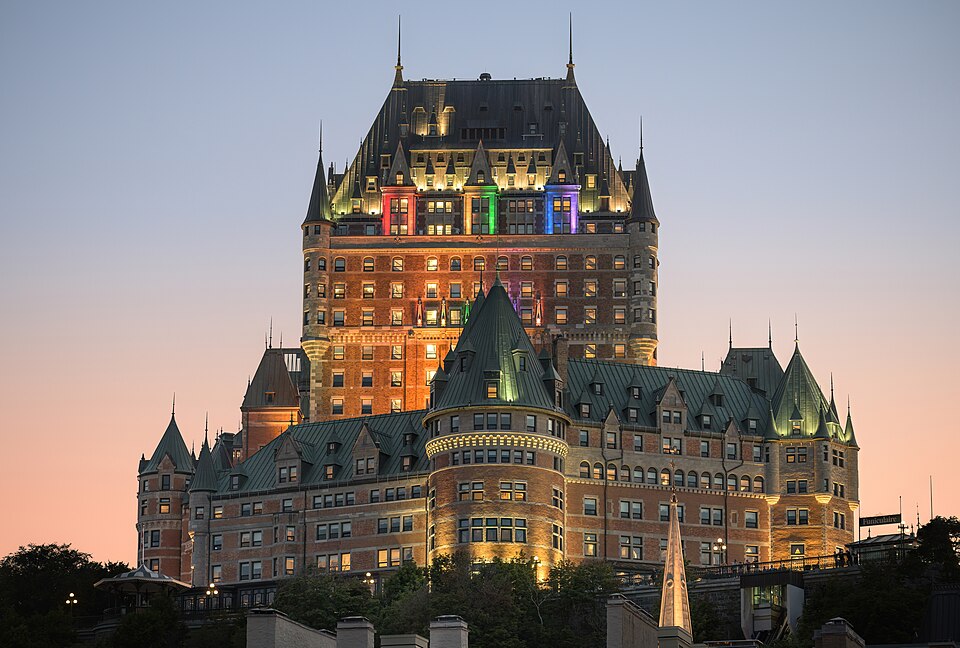
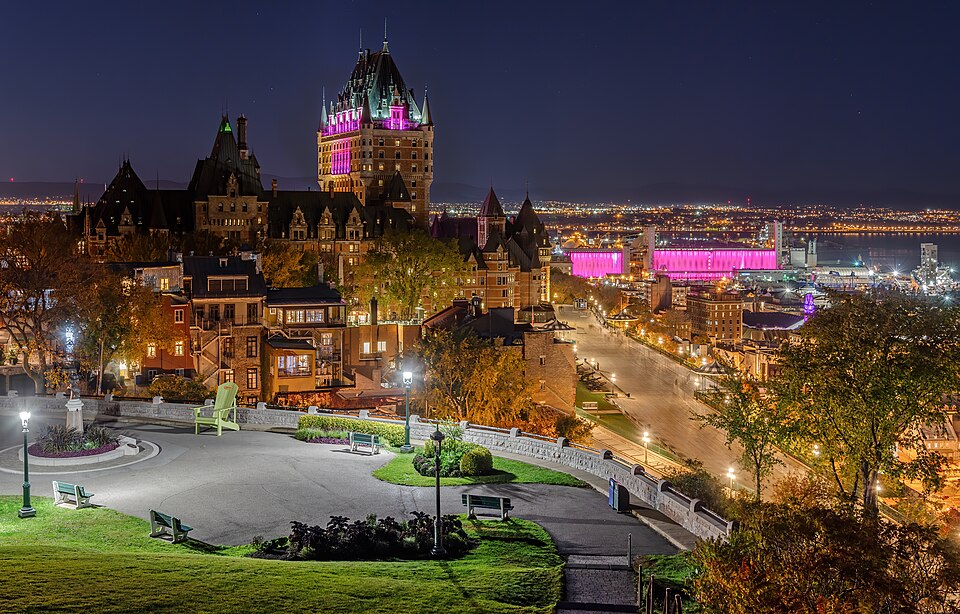
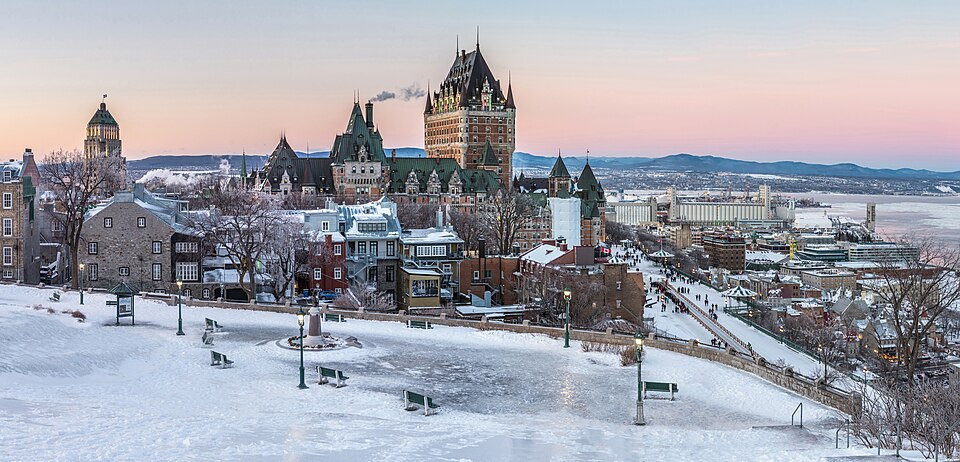
In the summer of 1608, a French explorer with 28 men landed at a place where the St. Lawrence River narrows beneath a high cliff, and built three wooden buildings inside a stockade. That little trading post became Quebec City — the first permanent European settlement in Canada — and the capital of a French empire that would one day stretch from Hudson Bay to the Gulf of Mexico. New France was built on beaver pelts, on alliances with Indigenous nations, and on a river that was the highway of a continent.
In short
New France began with Samuel de Champlain's founding of Quebec on 3 July 1608. From that trading post on the St. Lawrence, France built a colony whose economy ran on the fur trade — above all beaver pelts for European hats — and whose survival depended on alliances with Indigenous nations, especially the Huron-Wendat and the Algonquin. In 1663 the colony became a royal province of France, with a governor, an intendant, and a bishop, and the seigneurial system of landholding along the river. By 1759, when Britain conquered it, New France held about 60,000 to 70,000 French-speaking people — and its language, law, and Catholic faith would outlive French rule itself.
The founding of Quebec
Samuel de Champlain (c. 1570–1635) was a navigator, mapmaker, soldier, and colonial leader — and the man remembered as the father of New France. He first sailed to the St. Lawrence in 1603 with the fur trader Francois Grave Du Pont, and in 1604 he joined Pierre Dugua, Sieur de Mons, in founding Port Royal in Acadia (present-day Nova Scotia) — the first European settlement north of Florida. In the spring of 1608, Champlain sailed for the St. Lawrence with a commission to build a permanent settlement, and on 3 July 1608 he chose the site the local peoples called Kebec — 'where the river narrows' — and built the Habitation, three two-storey wooden buildings inside a stockade and moat.
The purpose was trade, not farming. Quebec sat where furs from the whole interior came downriver, and Champlain meant to intercept them before rival traders could. But he also wanted something more: he imagined French and Indigenous peoples living together, and he told Indigenous leaders that the French and their peoples would one day intermarry and become one people. In 1609 he joined his Huron and Algonquin allies against the Iroquois on the lake that now bears his name — an alliance that won him friends in the north and a lasting enemy in the south. By the time he died at Quebec on Christmas Day 1635, New France was still small, with only a few hundred French residents — but it had a permanent town, a map of the waterways, and a pattern of alliances that would hold for a century.
The fur trade
The fur trade was the economic engine of New France, and beaver was its fuel. European hat-makers needed beaver felt, and the finest beaver came from the cold waters of Canada. French traders — the coureurs des bois, 'runners of the woods' — paddled canoes deep into the interior, living with Indigenous peoples, learning their languages, and marrying into their families. Their children, and the children of Scottish and French traders, became the Metis. The trade tied France to Indigenous nations in a web of gifts, debts, and alliances: the French supplied kettles, guns, cloth, and beads, and Indigenous trappers supplied the pelts — and the knowledge without which no European could survive in the interior.
In 1670, King Charles II of England chartered the Hudson's Bay Company, giving it exclusive trading rights over the whole Hudson Bay drainage — Rupert's Land, about 40 percent of modern Canada. For the next hundred years, the Company competed with Montreal-based traders from its posts on the bay, and the skilled canoe-men who carried the trade, the voyageurs, became folk heroes of Canadian history. The Company was so successful that its trading posts — Fort Garry, Fort Edmonton, Fort Langley, Fort Victoria — later became cities. The fur trade drew the map of Canada: the rivers were the roads, the posts were the towns, and the alliances were the politics.
A royal province
In 1663, King Louis XIV took direct control of New France and made it a royal province. He sent a governor, an intendant to run the finances, and a bishop — Francois de Laval, whose cathedral in Quebec City still stands. He sent soldiers to defend the colony, and shiploads of young women, the filles du roi, to marry the settlers and grow the population. The intendant Jean Talon counted the people, encouraged farming and industry, and by the 1670s the colony was finally growing: by 1700 there were about 15,000 French settlers, most of them farming long, narrow strips of land along the St. Lawrence under the seigneurial system, where a seigneur granted land to habitants in return for rent and duties.
Life in New France was hard and deeply Catholic. The church ran the schools and hospitals; the Jesuits carried missions far into the interior, and some — like Jean de Brebeuf, killed by the Iroquois in 1649 — became martyrs. The colony's great enemy was the Iroquois Confederacy to the south, armed by Dutch and then English traders, and the wars between France and its Indigenous allies and the Iroquois ran on and off for most of the century. In 1701, the Great Peace of Montreal brought more than thirty Indigenous nations together with the French in a treaty that ended the fighting and set the terms of alliance for a generation. New France at its height was a thin ribbon of farms along the St. Lawrence, a chain of forts and missions reaching to the Great Lakes and the Mississippi, and a trading empire held together by canoes, kinship, and the beaver.
A small colony, a lasting mark
For all its reach, New France was always small. In 1759, on the eve of the British conquest, it held only 60,000 to 70,000 people — fewer than a single English colonial city. France had spent its strength in Europe and the Caribbean, and the colony lived on the edge of abandonment. Yet what New France built lasted: the French language of Quebec, the civil law that still governs private life there, the Catholic parishes, the long river farms, and the Metis nation of the west. When Britain conquered Canada, it did not erase New France. It inherited it — and spent the next two centuries learning to live with it.
| Milestone | Date | What happened |
|---|---|---|
| Port Royal founded in Acadia | 1605 | First European settlement north of Florida |
| Champlain founds Quebec | 3 July 1608 | The Habitation built at Kebec |
| Champlain fights with allies vs Iroquois | 1609 | Battle on Lake Champlain; alliance set for a century |
| Quebec falls to England, then returned | 1629–32 | Treaty of Saint-Germain-en-Laye returns Quebec to France |
| Champlain dies at Quebec | 25 Dec 1635 | Founder of French Canada; colony still only a few hundred |
| New France becomes a royal province | 1663 | Governor, intendant, and bishop appointed |
| Hudson's Bay Company chartered | 1670 | English monopoly over Rupert's Land |
| Great Peace of Montreal | 1701 | French peace with more than 30 Indigenous nations |
| Population of New France | c. 1759 | About 60,000–70,000 French-speaking people |
Sources: Discover Canada (Government of Canada); Encyclopaedia Britannica, 'Samuel de Champlain'; Ontario Heritage Trust, 'Quebec, 1608-09'; Wikipedia, 'History of Quebec City'; EBSCO, 'Quebec Is Founded'. Checked 29 November 2026.