The British Conquest: Plains of Abraham and the War of 1812
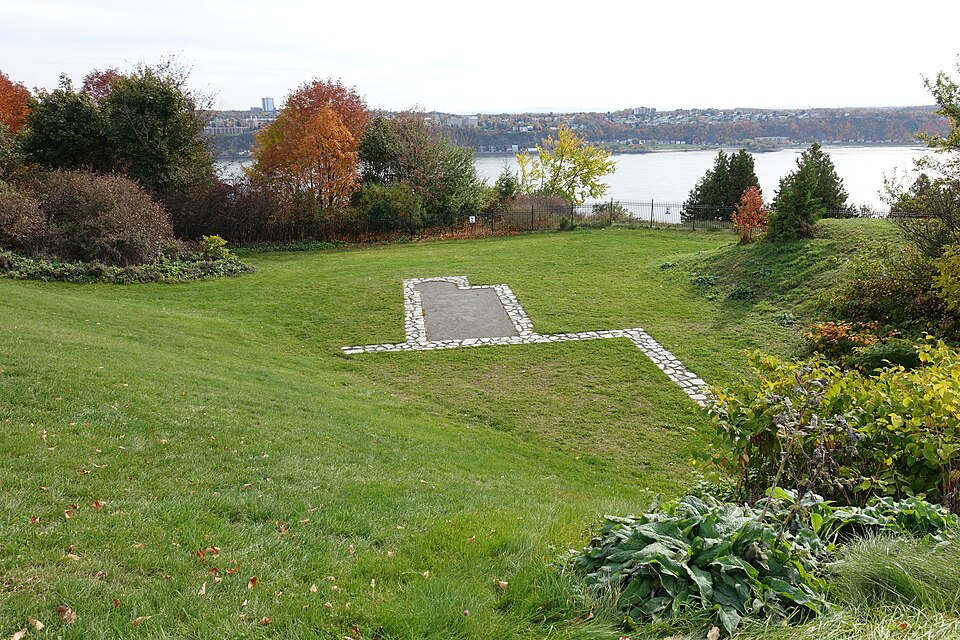
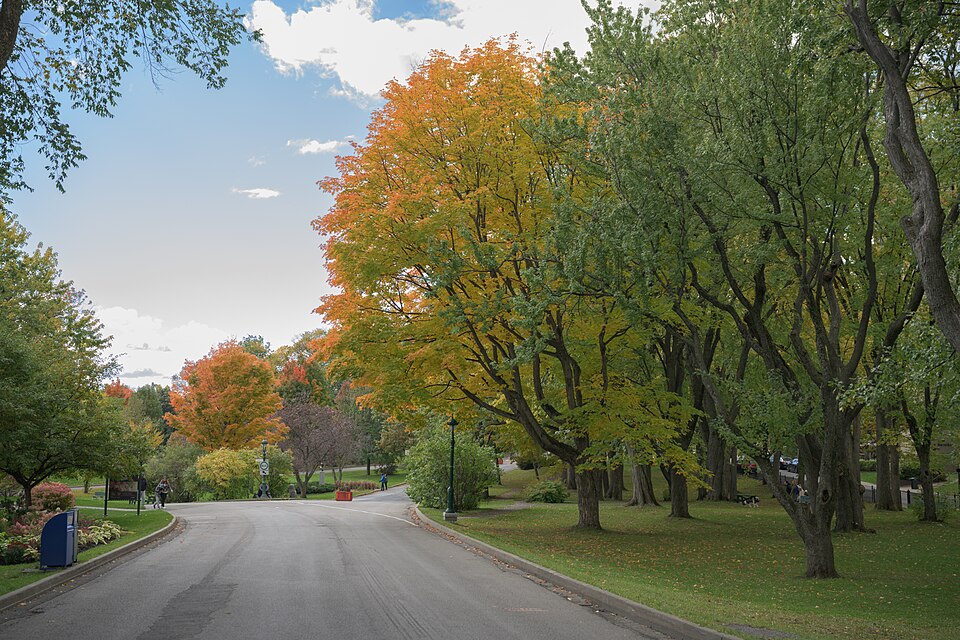
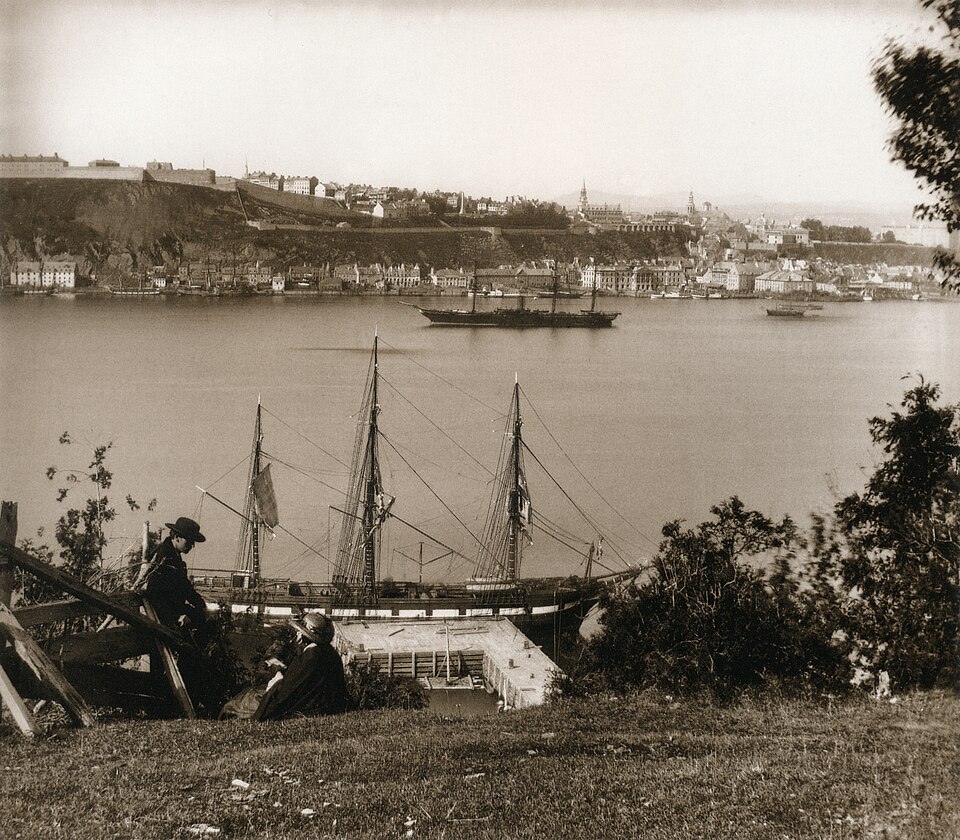
On a September morning in 1759, two armies met on a farmer's field outside the walls of Quebec City, and in less than an hour the fate of a continent was decided. Both generals died. Five days later the city surrendered, and within four years France had lost Canada altogether. But the conquest did not make Canada English. The Quebec Act of 1774, the Loyalists, and the War of 1812 made sure of that — and the Canada that emerged was something new: British in its crown, French in its heart, and determined not to become American.
In short
The British conquest of New France came in the Seven Years' War: on 13 September 1759, General James Wolfe defeated the Marquis de Montcalm on the Plains of Abraham outside Quebec City, and both men died; Quebec surrendered on 18 September, Montreal capitulated in 1760, and the Treaty of Paris of 10 February 1763 ceded New France to Britain. Britain then faced a problem no other conqueror had faced: 60,000 to 70,000 French-speaking Catholics who would not become English. The Quebec Act of 1774 answered by preserving French civil law and the Catholic Church. After the American Revolution, Loyalists flooded north, and in the War of 1812 (1812–15) the United States invaded and was repelled by British regulars, Canadian militia, and Indigenous allies — a defence that helped make Canada a country apart from the United States.
The battle on the Plains
The Seven Years' War (1756–63) was the first truly world war, fought in Europe, India, the Caribbean, and North America. In America it was called the French and Indian War, and by 1758 Britain was winning it: Louisbourg fell, opening the mouth of the St. Lawrence, and British armies took the forts of the interior. In June 1759, a fleet under Vice Admiral Charles Saunders carried an army of about 8,500 men under Major General James Wolfe, then only 32 years old, up the St. Lawrence to besiege Quebec, the walled capital of New France. The French commander, the Marquis de Montcalm, held the city and the north shore with a smaller force of regulars, militia, and Indigenous allies.
Wolfe besieged the city for more than two months, bombarding it across the river, but neither side could break the deadlock — and with winter coming, neither could be resupplied. Wolfe gambled on a landing upstream: in the dark early hours of 13 September, boats drifted downriver with the tide to a cove called the Anse au Foulon, light infantry scrambled up a steep path, overpowered a small guard post, and by dawn some 4,500 British soldiers were forming lines on the Plains of Abraham, open farmland west of the city walls. Montcalm, for reasons still debated, chose to attack at once instead of waiting behind the walls. The British held their fire until the French were close, then broke them with volleys. The main action lasted perhaps fifteen minutes. Wolfe, hit several times, died on the field after being told the French were running. Montcalm, wounded while rallying his men, died early the next morning. Quebec capitulated on 18 September.
The war in Canada was not quite over. In April 1760 the French commander, the Chevalier de Levis, defeated the British garrison at Sainte-Foy and besieged the city, but British ships reached Quebec first when the river ice broke, and Montreal surrendered on 8 September 1760. The Treaty of Paris, signed on 10 February 1763, formally transferred New France to Britain. France kept only two tiny islands off Newfoundland — Saint Pierre and Miquelon — and the sugar islands of the Caribbean, which it valued more than Canada. Voltaire is said to have called Canada 'a few acres of snow'. The French who stayed — some 60,000 to 70,000 of them — now had a new king.
The Royal Proclamation and the Quebec Act
Britain's first answer to governing its new subjects was the Royal Proclamation of 1763, which set up the Province of Quebec and, in the same document, said Indigenous land could only be bought by the Crown through treaty — a rule that still stands in Canadian law. But the Proclamation also tried to make the colony English: an oath of allegiance that Catholics could not take, British civil law, and an elected assembly that French Catholics could not join. It failed. The French Canadians kept their language, their church, and their law, and the first British governors, James Murray and Guy Carleton, saw that forcing the issue would only breed rebellion.
The Quebec Act of 1774, largely Carleton's work, took the opposite approach. Parliament expanded the Province of Quebec, restored French civil law for private matters while keeping English criminal law, allowed Catholics to hold public office, and let the Catholic Church collect tithes. It was, for its time, an exceptionally liberal measure — British Catholics would not win the same freedoms until 1829. It won the loyalty of the clergy and the seigneurs, the ruling classes of French Canada. But it also enraged the Thirteen Colonies to the south, who counted it among the 'Intolerable Acts' that pushed them toward revolution. The Quebec Act helped cause the American Revolution — and it also ensured that when the revolution came, Quebec would not join it.
Loyalists and a new Canada
In 1776 the thirteen colonies declared independence, and when the war ended in 1783, tens of thousands of Loyalists — Americans who had stayed loyal to the Crown — fled north. They came from every background: Dutch, German, British, Scandinavian, and Indigenous, including thousands of Mohawk led by Joseph Brant, who settled on the Grand River in what is now Ontario. They also included Black Loyalists, enslaved people who had been promised freedom for serving the British cause, who settled in Nova Scotia — though many were given poor land, and in 1792 some sailed on to found Freetown in Sierra Leone.
The Loyalists changed Canada. They wanted British institutions, English law, and elected assemblies, and in 1791 Parliament divided the old Province of Quebec into Upper Canada (now Ontario) and Lower Canada (now Quebec), each with its own assembly — the first time the Canadas had elected legislatures. The name 'Canada' became official, and the Atlantic colonies and the two Canadas were known together as British North America. The Loyalists also brought a deep suspicion of the republic to the south — a suspicion that would be tested within a generation.
The War of 1812
Believing it would be easy to conquer Canada, the United States launched an invasion in June 1812. The Americans were mistaken. British regulars, Canadian militia, and Indigenous allies fought them off at every turn. In July, Major-General Sir Isaac Brock captured Detroit — then was killed defending Queenston Heights, near Niagara Falls, in October, in a battle the Americans lost. The Shawnee leader Tecumseh, who had built a confederacy of Indigenous nations to resist American expansion, fought alongside the British until he was killed at the Battle of the Thames in 1813. In 1813, Lieutenant-Colonel Charles de Salaberry and 460 soldiers, mostly French Canadiens, turned back 4,000 American invaders at Chateauguay, south of Montreal. And in 1813 the Americans burned the Parliament Buildings in York (now Toronto); in retaliation the British burned Washington the following year.
The war ended with the Treaty of Ghent at the end of 1814, which changed nothing on the map — and changed everything in people's minds. It was a stalemate, but it gave English Canadians a sense of identity separate from the United States, and it gave French Canadians a share in a victory they had helped win. The Rush-Bagot Agreement of 1817 limited warships on the Great Lakes, and the border between Canada and the United States — the longest undefended border in the world — has been peaceful ever since. The War of 1812 is still remembered in Canada as the war that kept Canada Canadian.
| Milestone | Date | What happened |
|---|---|---|
| Battle of the Plains of Abraham | 13 Sept 1759 | Wolfe beats Montcalm; both generals die |
| Quebec surrenders | 18 Sept 1759 | City capitulates five days after the battle |
| Montreal capitulates | 8 Sept 1760 | French military control of Canada ends |
| Treaty of Paris | 10 Feb 1763 | France cedes New France to Britain |
| Royal Proclamation | 7 Oct 1763 | Province of Quebec created; Indigenous land rule set |
| Quebec Act | 1774 | French civil law and Catholic Church preserved |
| American Revolution ends; Loyalists arrive | 1783 | Tens of thousands settle in British North America |
| Upper and Lower Canada created | 1791 | Two Canadas, each with an elected assembly |
| War of 1812 begins | June 1812 | United States invades Canada |
| Battle of Queenston Heights | Oct 1812 | Brock killed; Americans repelled |
| Battle of Chateauguay | Oct 1813 | 460 defenders turn back 4,000 invaders |
| Treaty of Ghent | Dec 1814 | War ends in stalemate; Canada stays separate |
Sources: The Canadian Encyclopedia, 'The Conquest of New France' and 'The Quebec Act, 1774'; Discover Canada (Government of Canada); historian.info, 'The Battle of the Plains of Abraham'. Checked 29 November 2026.