Confederation 1867: How Canada Became a Country
Canada was not won in a revolution. It was negotiated — in hotel rooms in Charlottetown, in conference halls in Quebec City, and in London — by politicians who disagreed about almost everything except one thing: that the colonies of British North America would be safer, richer, and freer together than apart. On 1 July 1867, four provinces became one Dominion, and a new country appeared on the map of North America. It was the first step, not the last, toward the Canada of today.
In short
Confederation was the union of three British colonies — the Province of Canada, Nova Scotia, and New Brunswick — into the Dominion of Canada by the British North America Act, passed by the British Parliament on 29 March 1867 and in force on 1 July 1867. The old Province of Canada was divided into two provinces, Ontario and Quebec, so the new federation began with four provinces. Six more provinces and three territories joined later: Manitoba (1870), British Columbia (1871), Prince Edward Island (1873), Alberta and Saskatchewan (1905), Newfoundland (1949), Yukon (1898), and Nunavut (1999). Canada Day, 1 July, is still the country's national day.
Why unite?
By the 1860s, the Province of Canada — the union of Upper and Lower Canada created in 1841 — was stuck. Its parliament was deadlocked between English and French members, its economy was small, and its politics were bitter. At the same time, Britain was tired of paying to defend its North American colonies, and the United States had just finished a civil war with a huge army — and with voices calling for the annexation of Canada. The colonies were also too small to build the railways and canals they needed. Union offered a way out of all three problems at once: a bigger market, a shared defence, and a railway to the sea.
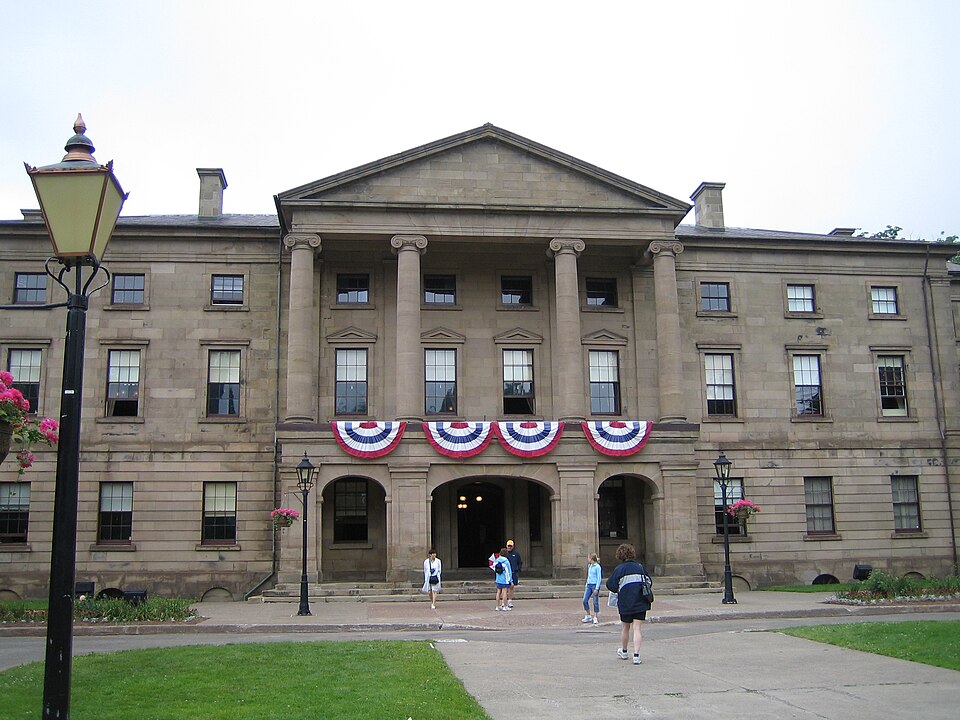
The idea had been talked about for years, but it took a conference that was meant to discuss something else to start it. In September 1864, delegates from the Maritime colonies met at Charlottetown, Prince Edward Island, to discuss a union of the Maritimes alone. The Canadians — led by John A. Macdonald, George Brown, and George-Etienne Cartier — turned up uninvited and argued for a bigger union of all the colonies. The Maritimers listened, and a month later a bigger conference met in Quebec City and agreed the 72 Resolutions, the detailed plan for a federal union. Prince Edward Island and Newfoundland rejected the plan, but the other three colonies carried on, and in December 1866 their delegates met in London to draft the final bill.
The British North America Act
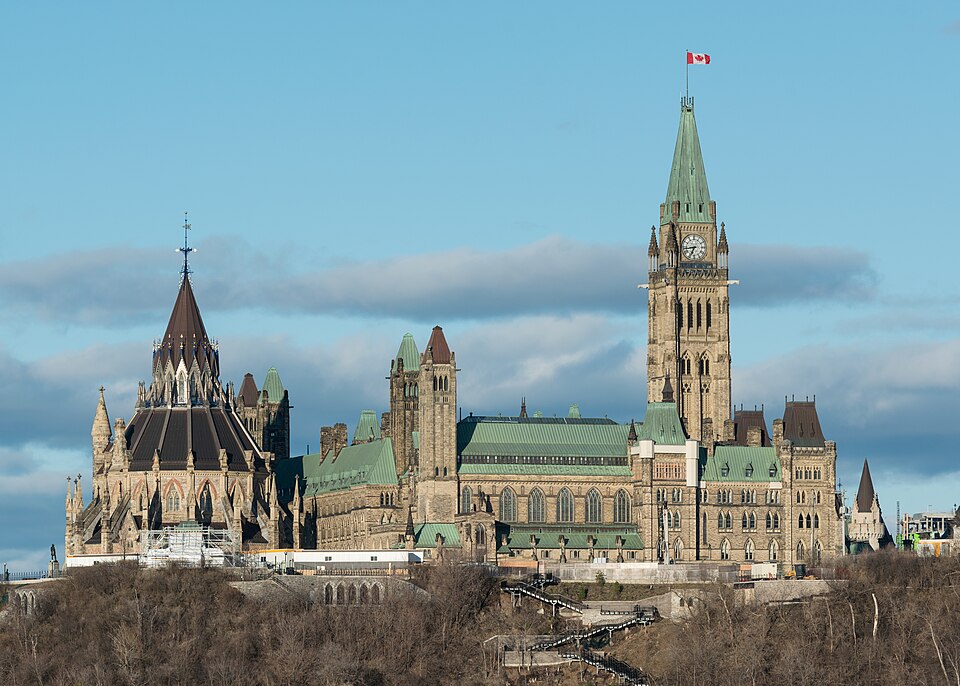
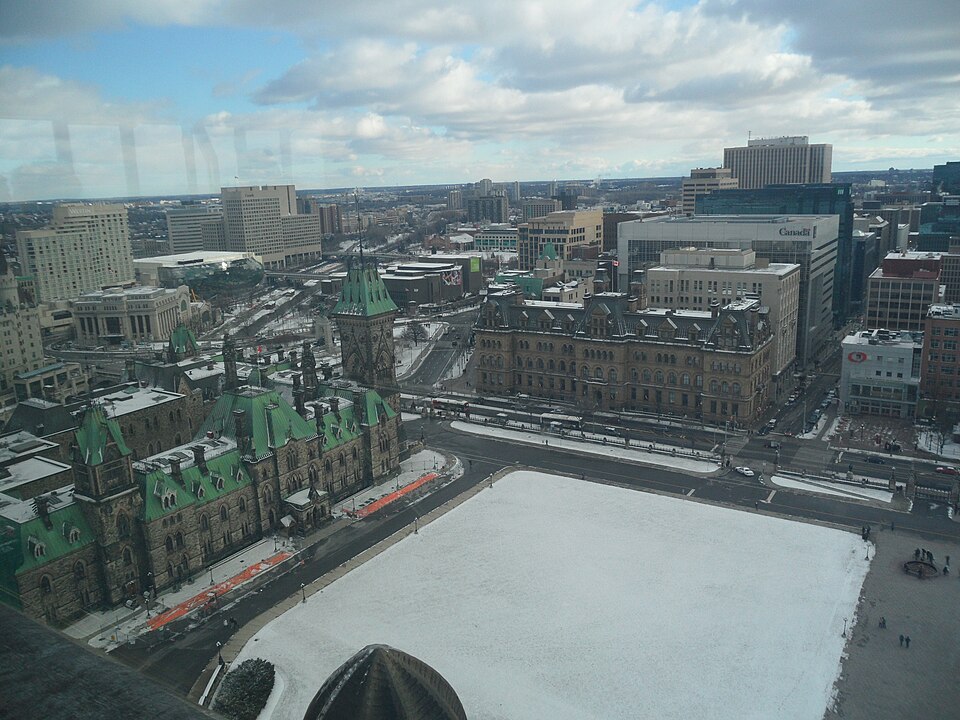
The British North America Act — now called the Constitution Act, 1867 — was passed by the British Parliament on 29 March 1867 and came into effect on 1 July 1867. Its preamble said the provinces had asked to be 'federally united into One Dominion under the Crown of the United Kingdom of Great Britain and Ireland, with a Constitution similar in Principle to that of the United Kingdom'. Section 5 divided Canada into four provinces: Ontario, Quebec, Nova Scotia, and New Brunswick. Section 16 made Ottawa the seat of government. The Act set up a Parliament of two houses — an elected House of Commons and an appointed Senate — and divided powers between the federal government and the provinces: Ottawa got trade, defence, criminal law, and the post office; the provinces got education, health, property, and civil rights.
The men who made it — traditionally counted as 36 Fathers of Confederation — are still argued about today. John A. Macdonald, the first prime minister, is honoured for building the country and criticised for his treatment of Indigenous peoples and the Metis, and for the hanging of Louis Riel. George-Etienne Cartier, the French-Canadian leader, is remembered for insisting that Quebec keep its language, its civil law, and its schools inside the union — a bargain that still shapes Canada. Confederation was a compromise, and like all compromises it left questions open: above all, what place French Canada and Indigenous peoples would have in the new country.
A country that kept growing
Confederation was only the beginning. Section 146 of the Act provided for new provinces and territories to join, and they did: Manitoba in 1870, British Columbia in 1871, Prince Edward Island in 1873, Alberta and Saskatchewan in 1905, and Newfoundland — which had stayed out for 82 years — in 1949, as the tenth province. The territories came too: Yukon in 1898, carved out of the northwest during the Klondike Gold Rush, and Nunavut in 1999, the Inuit homeland. Each addition changed the country: the west brought wheat and oil, the north brought minerals and Arctic sovereignty, and Newfoundland brought the Atlantic fishery and offshore oil.
But Confederation also left a wound. The Act said nothing about Indigenous peoples except that Ottawa would legislate for 'Indians, and Lands reserved for the Indians' — and the Canada that followed used that power for the Indian Act and the residential schools. It said nothing about the Metis of the Red River, who had to fight for Manitoba. And it said nothing about women, who would wait another fifty years for the federal vote. The story of Canada after 1867 is, in large part, the story of people the founders left out, claiming their place in the country the founders made.
What 1 July means
On 1 July 1867, there were no fireworks and no great crowds. The day passed quietly in the new Dominion's towns, and the first Dominion Day — as it was called until 1982, when it became Canada Day — was a modest affair. But the date matters because of what it started: a federation that grew from four provinces on the Atlantic and the St. Lawrence into a country spanning a continent, from sea to sea to sea. Canadians still argue about Confederation — about whether Quebec got a fair deal, about whether the provinces have too much or too little power, about what the founders owed the peoples already here. That argument is itself part of the bargain they made: a country built by negotiation, still negotiating.
| Milestone | Date | What happened |
|---|---|---|
| Charlottetown Conference | Sept 1864 | Maritime union discussed; Canadians propose a wider union |
| Quebec Conference | Oct 1864 | 72 Resolutions agreed as the plan for union |
| London Conference | Dec 1866–Feb 1867 | Final draft of the British North America Act |
| Royal assent | 29 March 1867 | British Parliament passes the Act |
| Confederation takes effect | 1 July 1867 | Dominion of Canada begins with four provinces |
| Manitoba joins | 15 July 1870 | Fifth province, after the Red River Resistance |
| British Columbia joins | 20 July 1871 | Sixth province, on promise of a railway |
| Prince Edward Island joins | 1873 | Seventh province |
| Alberta and Saskatchewan join | 1905 | Prairie provinces created |
| Newfoundland joins | 31 March 1949 | Tenth province, after two referendums |
| Nunavut created | 1 April 1999 | Newest territory, an Inuit homeland |
| Act renamed Constitution Act, 1867 | 1982 | Renamed when the Constitution was patriated |
Sources: The British North America Act, 1867 (legislation.gov.uk); The Canadian Encyclopedia, 'Constitution Act, 1867'; Encyclopaedia Britannica, 'Fathers of Confederation'; Statistics Canada, 'The Constitution of Canada'. Checked 29 November 2026.