Westward Expansion: Rupert's Land, the Railway, and the Prairies
In 1867, Canada was a thin country along the St. Lawrence and the Atlantic coast. Within twenty years it stretched to the Pacific — bought, surveyed, railed, and settled at a speed that still astonishes. The price was paid by the peoples who already lived in the west: the Metis, whose leader Louis Riel was hanged for resisting, and the First Nations, whose treaties were signed and then broken. The railway that made Canada a country from sea to sea also made it a country of unfinished business.
In short
Westward expansion began when Canada bought Rupert's Land — the vast Hudson's Bay Company territory — in 1869–70, adding some 4 million square kilometres. The transfer sparked the Red River Resistance of 1869–70, led by the Metis leader Louis Riel, and the creation of Manitoba in 1870. British Columbia joined in 1871 on the promise of a railway to the Pacific. The Canadian Pacific Railway, incorporated in 1881, was completed when the last spike was driven at Craigellachie, British Columbia, on 7 November 1885 — nine days before Riel was hanged at Regina for leading the North-West Resistance of 1885. Settlement followed under the Dominion Lands Act of 1872, which offered free land to settlers, and Alberta and Saskatchewan became provinces in 1905.
Buying a continent
Rupert's Land was the name for the whole Hudson Bay drainage basin — about 40 percent of modern Canada — granted to the Hudson's Bay Company by King Charles II in 1670. For two hundred years the Company ruled it as a fur-trading empire, with posts and forts and almost no settlers. When Canada became a Dominion in 1867, its leaders wanted that land: without it, the country would be a strip on the edge of the continent, and the United States — which had just bought Alaska — might take the west instead. In 1869 Canada agreed to buy Rupert's Land from the Company, and the transfer was set for 1870.
The people already living there were not consulted. At the Red River Settlement — present-day Winnipeg — the Metis, the mixed French-Indigenous people of the fur trade, heard that Canadian surveyors were already laying out their river lots into square farms, and that their land, language, and religion were at risk. Led by Louis Riel, a young Metis leader educated in Montreal, they stopped the surveyors, seized Fort Garry, and formed a provisional government to negotiate terms for joining Canada. The Red River Resistance of 1869–70 was not a war of independence: Riel wanted Manitoba to enter Confederation with its rights protected. Ottawa sent troops, but it also negotiated, and the Manitoba Act of 1870 created the province of Manitoba — the fifth province — with guarantees of Metis land and of French-language and Catholic schools. Many of those promises were later broken or delayed, and many Metis, finding life impossible among the new settlers, sold their land and moved west to the Saskatchewan River.
The railway bargain
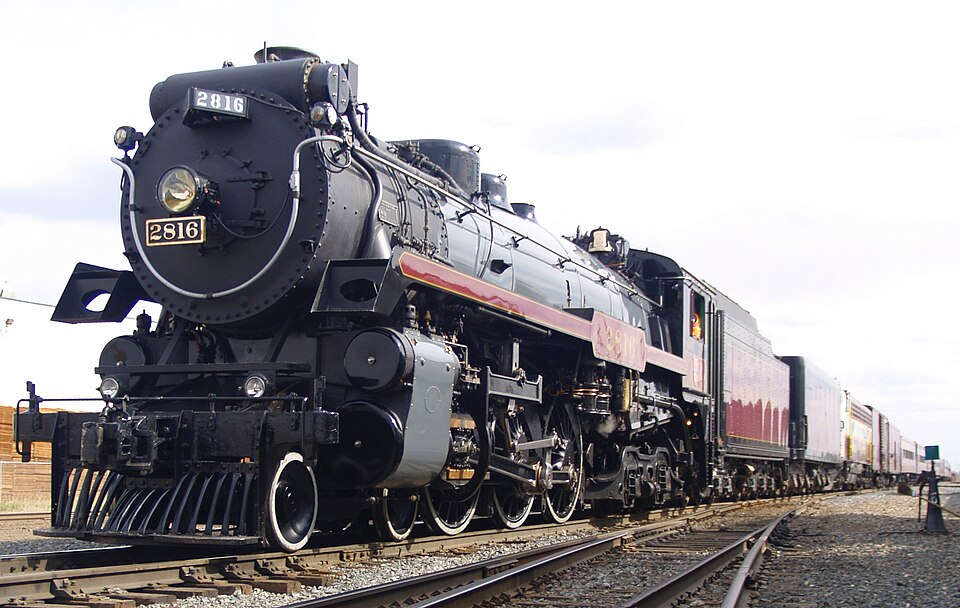
British Columbia had joined Confederation in 1871 on one condition: a railway to the Pacific within ten years. It was a promise nobody knew how to keep. The line had to cross the Canadian Shield, the Prairies, and the Rocky Mountains — some of the hardest railway country on earth — and the first attempts failed for lack of money and will. When John A. Macdonald returned to power in 1878, his National Policy tied three things together: high tariffs to protect Canadian industry, settlement of the west, and a transcontinental railway. The Canadian Pacific Railway was incorporated in 1881, and the line was pushed ahead at extraordinary speed with government grants of land and money.
The work was brutal. Thousands of labourers — including some 15,000 Chinese workers, who were paid less than others and given the most dangerous work in the mountains — blasted tunnels, built trestles, and laid track through rock and muskeg. The railway's money ran out more than once, and only new loans from Parliament kept it going. The North-West Resistance of 1885, which showed how fast troops could be moved by rail, helped win the last loan. On 7 November 1885, at Craigellachie in the mountains of British Columbia, the railway's director Donald Smith drove the last spike, and Canada was joined from coast to coast. The photographs of that moment — a small group of men in suits and work clothes around a single spike — became one of the most famous images in Canadian history.
Riel and the North-West Resistance
By 1885, the Metis who had moved west to the Saskatchewan River were in trouble again. The bison herds they lived on were vanishing, the railway had taken the freight work from their carts and boats, and government surveyors were again laying out their land without settling their claims. The Plains peoples, alarmed by the loss of the buffalo and unhappy with the treaties, were restless too. The Metis sent for Riel, who was living in exile in Montana, and he returned to lead a new resistance. Canada rushed troops west on the not-quite-finished railway, and after battles at Duck Lake, Fish Creek, and Batoche, the resistance was crushed.
Riel was tried for high treason at Regina. Despite evidence that he was of unsound mind, he was convicted — with a recommendation for mercy — and Macdonald, as prime minister and minister of justice, refused clemency. Riel was hanged at Regina on 16 November 1885, nine days after the last spike was driven. The hanging split the country: in Quebec, Riel became a martyr to French-Canadian rights, and a nationalist government was elected there; in Ontario, the execution was cheered. Riel is now widely recognised as a founder of Manitoba and a defender of Metis rights, and in 1992 Parliament formally recognised him as such. The railway he helped to complete, and the resistance he led, are two sides of the same story.
Settling the Prairies
With the railway open, the west filled up. The Dominion Lands Act of 1872 offered 160 acres of free land to any adult man who would farm it for three years, and the government advertised the Prairies across Europe — in Britain, Ukraine, Germany, Scandinavia, and beyond. The North-West Mounted Police, founded in 1873, kept a rough order on the frontier. The Klondike Gold Rush of 1896–99 drew tens of thousands to the Yukon. Wheat became the great export crop, and the Prairie provinces grew from empty grassland into the breadbasket of the British Empire. In 1905, Alberta and Saskatchewan were carved out of the Northwest Territories and became provinces.
But the settlement was built on broken ground. The Numbered Treaties, signed between 1871 and 1921, had promised First Nations reserves, schools, and help with farming in return for sharing the land. When the bison vanished and the settlers arrived, many of those promises were kept late, partly, or not at all — and the reserve system, the pass system that kept people from leaving their reserves, and the residential schools that took their children were the tools of a policy meant to make Indigenous peoples disappear. The west was won, and the west is still reckoning with how it was won. That reckoning — in land claims, in courts, and in the Truth and Reconciliation Commission's Calls to Action — is part of Canada's modern history, and it began with the railway.
| Milestone | Date | What happened |
|---|---|---|
| Rupert's Land transferred to Canada | 1869–70 | Hudson's Bay Company sells its territory |
| Red River Resistance | 1869–70 | Louis Riel leads Metis provisional government |
| Manitoba Act; Manitoba joins | 15 July 1870 | Fifth province created |
| British Columbia joins | 20 July 1871 | On promise of a railway to the Pacific |
| Dominion Lands Act | 1872 | Free 160-acre grants to Prairie settlers |
| North-West Mounted Police founded | 1873 | Police for the western frontier |
| National Policy adopted | 1879 | Tariffs, railway, and immigration to settle the west |
| Canadian Pacific Railway incorporated | 1881 | Construction accelerates |
| North-West Resistance | 1885 | Riel leads second resistance; suppressed |
| Last spike driven at Craigellachie | 7 Nov 1885 | Transcontinental railway completed |
| Riel hanged at Regina | 16 Nov 1885 | Nine days after the last spike |
| Klondike Gold Rush | 1896–99 | Tens of thousands rush to the Yukon |
| Alberta and Saskatchewan join | 1905 | Prairie provinces created |
Sources: Encyclopaedia Britannica, 'Canada: The transcontinental railway'; The Canadian Encyclopedia, 'Constitution Act, 1867'; canada-history.com, 'The Northwest Territories'; Fiveable, 'History of Canada 1867 to Present'. Checked 29 November 2026.