Modern Canada: The Charter, Quebec, and Reconciliation
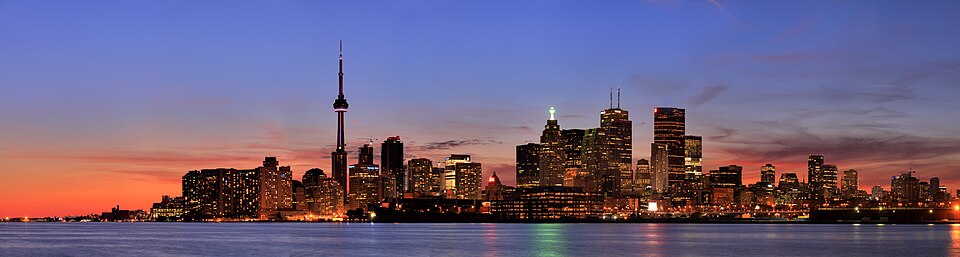
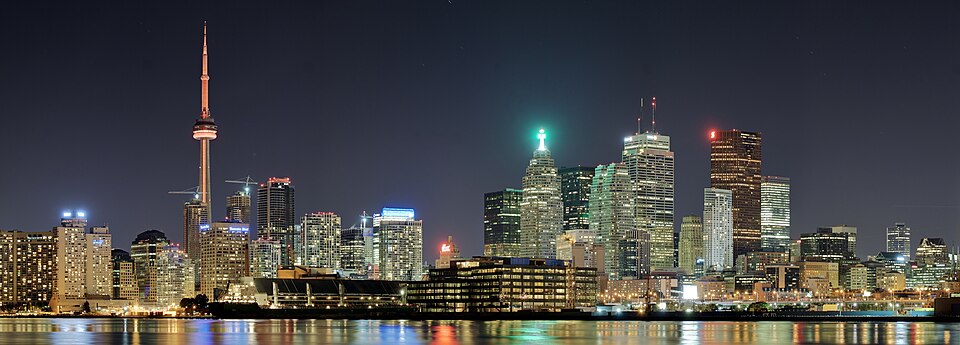
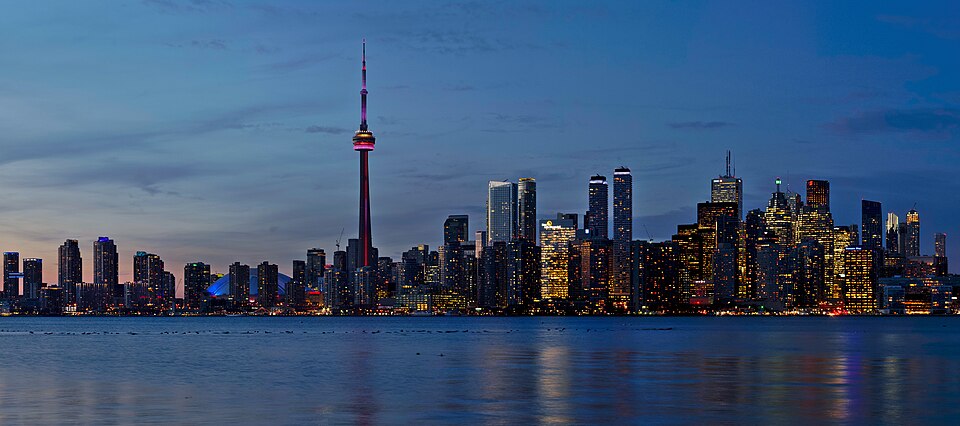
The Canada that came out of the Second World War was richer, more urban, and more confident than the one that went in — and it spent the next eighty years arguing about what it was. Was it one nation or two? A bilingual country or a multicultural one? A country that had made peace with its past, or one still avoiding it? The arguments were fought in referendums, in courts, and in constitutional conferences that ran for decades. They are not settled yet. But they made modern Canada.
In short
Modern Canada was shaped by three great arguments. The first was the Constitution: in 1982 Canada patriated its Constitution from Britain and added the Canadian Charter of Rights and Freedoms, but Quebec — which had not signed the 1981 agreement — stayed outside it. The second was Quebec's future: voters rejected sovereignty-association in a referendum on 20 May 1980 (59.6% No) and rejected sovereignty again on 30 October 1995, by the narrowest of margins (50.6% No, on about 94% turnout). The third was reconciliation with Indigenous peoples: the Truth and Reconciliation Commission reported in 2015 with 94 Calls to Action, and in 2021 the first National Day for Truth and Reconciliation was marked. Around those arguments, Canada became one of the world's most diverse countries — officially multicultural since 1971, officially bilingual since 1969 — and a middle power that has sent peacekeepers around the world.
Boom, suburbs, and a new flag
The thirty years after the war were Canada's boom years. Veterans came home to jobs, houses, and the baby boom; the suburbs spread around Toronto, Montreal, and Vancouver; oil was found in Alberta in 1947; and the St. Lawrence Seaway, opened in 1959, let ocean ships reach the Great Lakes. Canada joined NATO in 1949 and the United Nations at its founding, and Canadian soldiers served in Korea (1950–53) and as peacekeepers — a role invented, in large part, by the Canadian foreign minister Lester Pearson, who won the Nobel Peace Prize in 1957 for defusing the Suez Crisis with the first United Nations peacekeeping force.
In 1965, Canada got a new flag: the red maple leaf on white, designed after a long and bitter parliamentary debate that replaced the old Red Ensign. The same decade brought universal health care — Saskatchewan led the way in 1962, and the federal government made it national by the end of the decade — and a new approach to immigration that dropped the old preference for British and European newcomers and opened the country to the world. The Canada of 1970 looked very different from the Canada of 1945: bigger, more urban, more diverse, and less certain of what held it together.
Quebec wakes up
In Quebec, the 1960s brought the Quiet Revolution: a rapid, sweeping modernisation under Premier Jean Lesage, who nationalised electricity, built a modern welfare state, secularised the schools, and told Quebecers they were 'maitres chez nous' — masters in our own house. The old alliance of church and state was gone, and a new Quebec nationalism took its place — one that asked whether Quebec could be itself inside Canada at all.
The question turned violent for a time. In October 1970, the Front de liberation du Quebec kidnapped a British diplomat and a Quebec minister, Pierre Laporte, who was murdered; Prime Minister Pierre Trudeau invoked the War Measures Act and sent the army into Montreal. The October Crisis ended the FLQ, but the political movement it fed did not end. In 1976, the Parti Quebecois, which promised a referendum on independence, was elected to govern Quebec, and its leader, Rene Levesque, called the vote for 20 May 1980. The question asked Quebecers to approve negotiating sovereignty-association — independence with an economic partnership with Canada. They said no, by 59.6 percent to 40.4 percent. Trudeau had promised that a No vote would bring a renewed federalism, and the referendum's defeat set off the constitutional struggle of the next fifteen years.
Patriation and the Charter
The Constitution that Canada lived under in 1980 was still, legally, a British law — the British North America Act of 1867, which only the British Parliament could amend. Patriation meant bringing it home. Trudeau made it his mission, and after the premiers failed to agree in 1980, he announced he would proceed without them. The Supreme Court ruled in 1981 that unilateral patriation was legal but broke constitutional convention, and at the last minute a deal was struck with nine provinces — all except Quebec, whose premier had been left out of the final meeting and felt betrayed.
On 17 April 1982, Queen Elizabeth II signed the proclamation in Ottawa, in the rain, bringing the Constitution Act, 1982 into force. It did three things: it gave Canada the power to amend its own Constitution; it set out an amending formula — in general, the federal Parliament plus seven provinces representing half the population; and it added the Canadian Charter of Rights and Freedoms, guaranteeing freedom of expression and religion, democratic rights, mobility, legal rights, equality, and language rights, with a notwithstanding clause (Section 33) that lets legislatures override some rights for five years at a time. The Charter changed Canada: citizens could now challenge laws in court, and the Supreme Court became a central player in public life. But Quebec had not signed, and the wound of 1982 drove the next decade of politics: the Meech Lake Accord of 1987, which would have recognised Quebec as a 'distinct society', failed in 1990 when two provinces withheld approval; the Charlottetown Accord of 1992, a wider package, was rejected in a national referendum (54.4% No).
The 1995 referendum
In 1994, the Parti Quebecois won the Quebec election again, under Jacques Parizeau, and set a second referendum for 30 October 1995. The question asked whether Quebec should become sovereign after making a formal offer of a new economic and political partnership with Canada. The campaign was the most intense in Canadian history: federalists held a huge rally in Montreal days before the vote, sovereigntists argued that Quebec would finally control its own destiny, and the polls swung back and forth. Turnout was about 94 percent — the highest in Quebec's history.
The result was the closest in the country's history: 50.58 percent No, 49.42 percent Yes — a margin of about 54,000 votes out of 4.7 million cast. Parizeau blamed 'money and the ethnic vote' in a bitter concession speech and resigned. In 1998, the Supreme Court ruled in the Secession Reference that Quebec could not secede unilaterally, but that a clear majority on a clear question would oblige the rest of Canada to negotiate. In 2006, Parliament recognised that the Quebecois form a nation within a united Canada. There has been no third referendum, but the question has not gone away — and neither has the argument about what Canada is for.
Reconciliation and the Canada of today
While the constitutional argument ran, another reckoning was building. In 1996, the Royal Commission on Aboriginal Peoples reported on the harm the Indian Act had done. In 2008, Prime Minister Stephen Harper apologised in Parliament for the residential schools. The Truth and Reconciliation Commission, which worked from 2008 to 2015, heard more than 6,000 witnesses and issued 94 Calls to Action — on child welfare, education, health, justice, and language — and concluded that the residential school system amounted to cultural genocide. In 2021, after unmarked graves were found at former school sites, the first National Day for Truth and Reconciliation was marked on 30 September, and the work of answering the Calls to Action continues — slowly, and unevenly.
Today's Canada is a country of about 41 million people, one of the most diverse in the world: more than a fifth of Canadians were born abroad, and Toronto is often called the most multicultural city on earth. It is officially bilingual — English and French under the Official Languages Act of 1969 — and officially multicultural, a policy announced in 1971 that made Canada the first country in the world to adopt multiculturalism as state policy. It is a constitutional monarchy and a parliamentary democracy, a member of the G7, NATO, and the Commonwealth, and a country that still argues, loudly and peacefully, about what it is. That argument is the modern history of Canada.
| Milestone | Date | What happened |
|---|---|---|
| Korea and peacekeeping | 1950–57 | Canada serves in Korea; Pearson wins Nobel Prize 1957 |
| New flag adopted | 15 Feb 1965 | Red maple leaf replaces the Red Ensign |
| Official Languages Act | 1969 | English and French become official languages |
| October Crisis | Oct 1970 | FLQ kidnappings; War Measures Act invoked |
| Multiculturalism policy | 8 Oct 1971 | Canada first country to adopt it officially |
| Parti Quebecois elected | 1976 | Sovereignty referendum promised |
| Quebec referendum | 20 May 1980 | Sovereignty-association rejected, 59.6% No |
| Constitution patriated; Charter adopted | 17 April 1982 | Constitution Act, 1982; Quebec does not sign |
| Meech Lake Accord fails | 1990 | Distinct-society deal collapses |
| Charlottetown Accord rejected | 26 Oct 1992 | Referendum: 54.4% No |
| Quebec referendum | 30 Oct 1995 | Sovereignty rejected, 50.6% No; 94% turnout |
| Nunavut created | 1 April 1999 | Inuit homeland becomes a territory |
| Residential schools apology | 11 June 2008 | Prime Minister apologises in Parliament |
| Truth and Reconciliation report | 2015 | 94 Calls to Action |
| First National Day for Truth and Reconciliation | 30 Sept 2021 | Annual day of remembrance established |
Sources: EBSCO, 'Canada's Constitution Act'; The Canadian Encyclopedia, 'Multiculturalism' and 'Constitution Act, 1867'; Pier 21 Canadian Museum of Immigration, 'Canadian Multiculturalism Policy, 1971'; Truth and Reconciliation Commission of Canada (2015). Checked 29 November 2026.