First Nations and Inuit: The First Peoples of Canada
Canada's history did not begin with European ships. People had lived on this land for thousands of years before any explorer arrived — hunting on the Arctic ice, fishing the Pacific coast, farming corn beside the Great Lakes, and trading across a continent. They were not one people but hundreds of nations, each with its own language, laws, and way of life. Their story is the first chapter of Canada, and it is still being written today.
In short
Indigenous peoples reached North America at least 12,000 years ago, and by the time Europeans arrived they had built hundreds of distinct societies across what is now Canada — from the Haudenosaunee Confederacy in the east to the totem-pole cultures of the Pacific coast and the Inuit of the Arctic. The Constitution of Canada recognises three groups of Indigenous peoples: First Nations, Inuit, and Metis. In the 2021 Census, 1,807,250 people identified as Indigenous, about 5 percent of Canada's population. European contact brought the fur trade and treaties, but also disease, the Indian Act of 1876, and residential schools — a system the Truth and Reconciliation Commission in 2015 called cultural genocide. Indigenous nations survived all of it, and today they are rebuilding languages, governments, and land rights.
The first peoples
People reached the Americas from Asia during the last Ice Age, crossing a land bridge that once joined Siberia to Alaska, and then spreading south across two continents. Archaeologists generally agree that people were in North America by about 12,000 years ago, and some sites suggest earlier dates. The ice that covered much of Canada for a long time means the southern parts of the continent were probably settled before the far north — and the Inuit, who live in Canada's Arctic regions today, were among the last Indigenous peoples to reach Canada, arriving from the west about a thousand years ago.
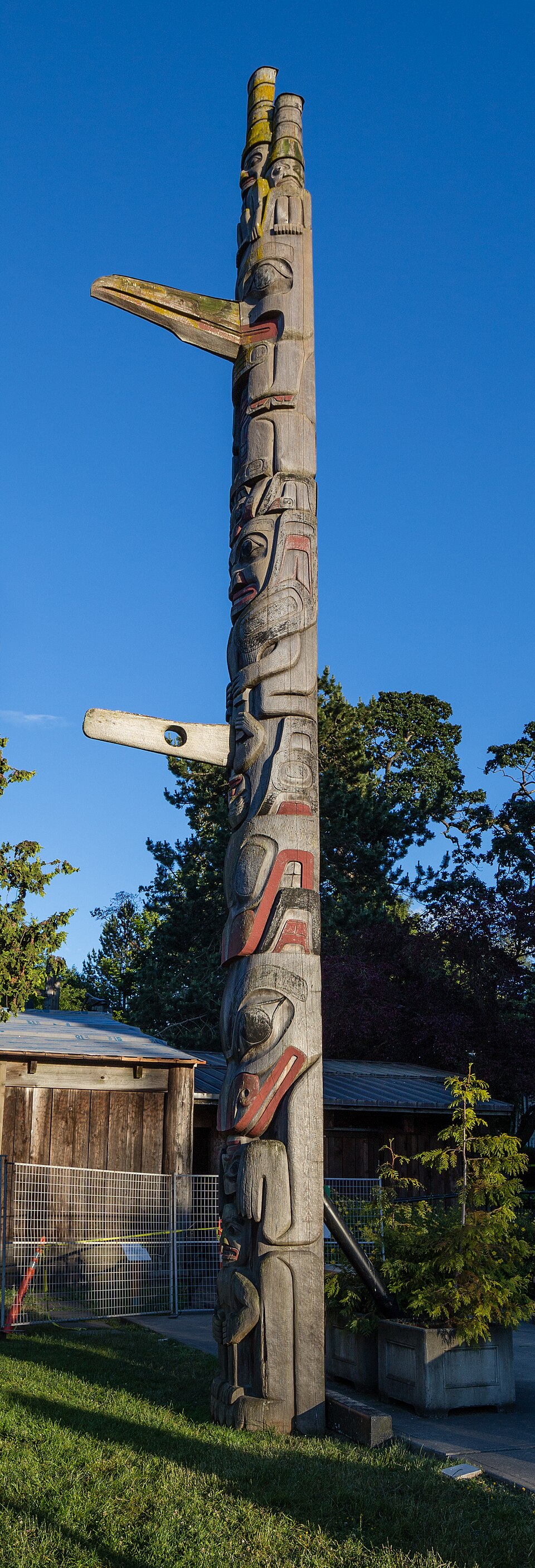
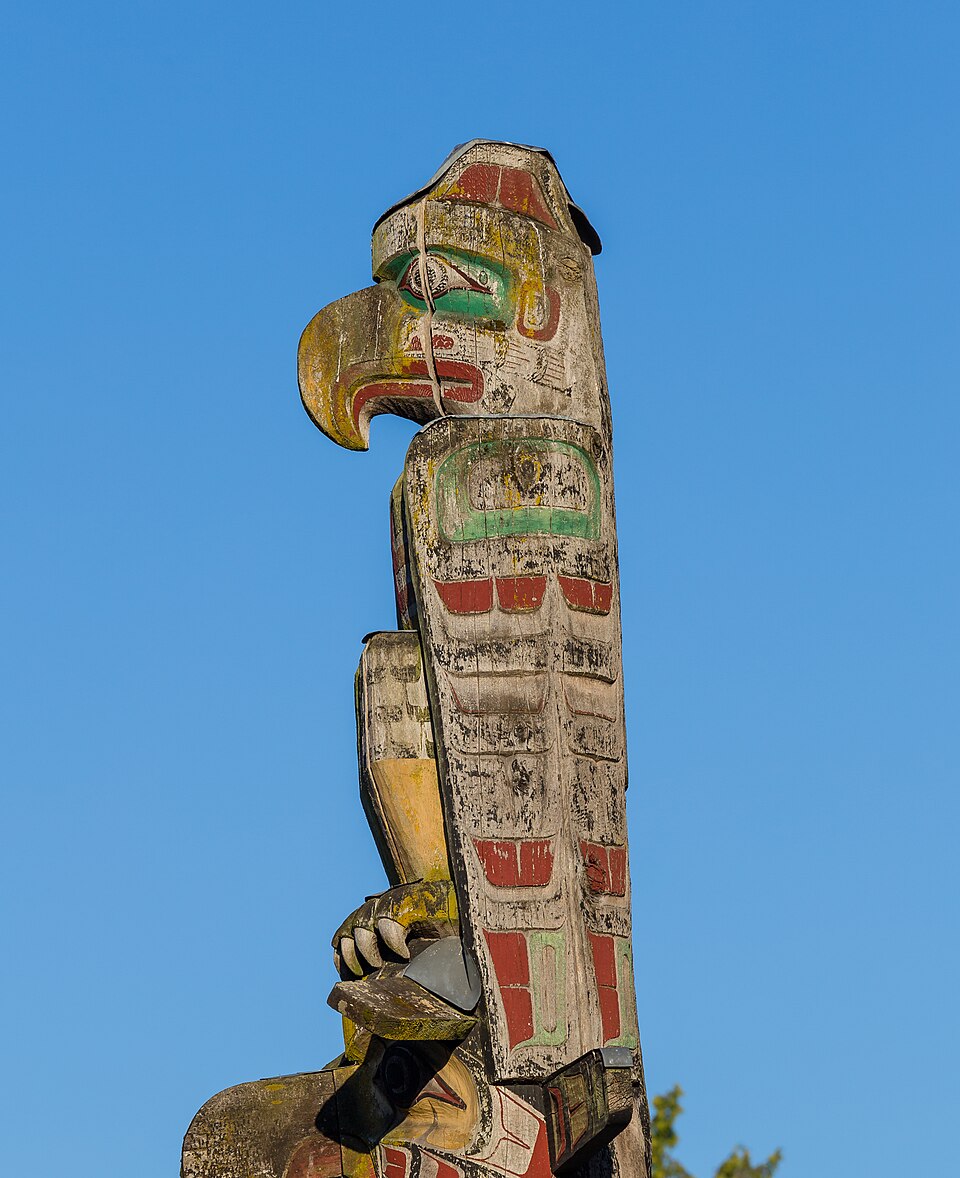
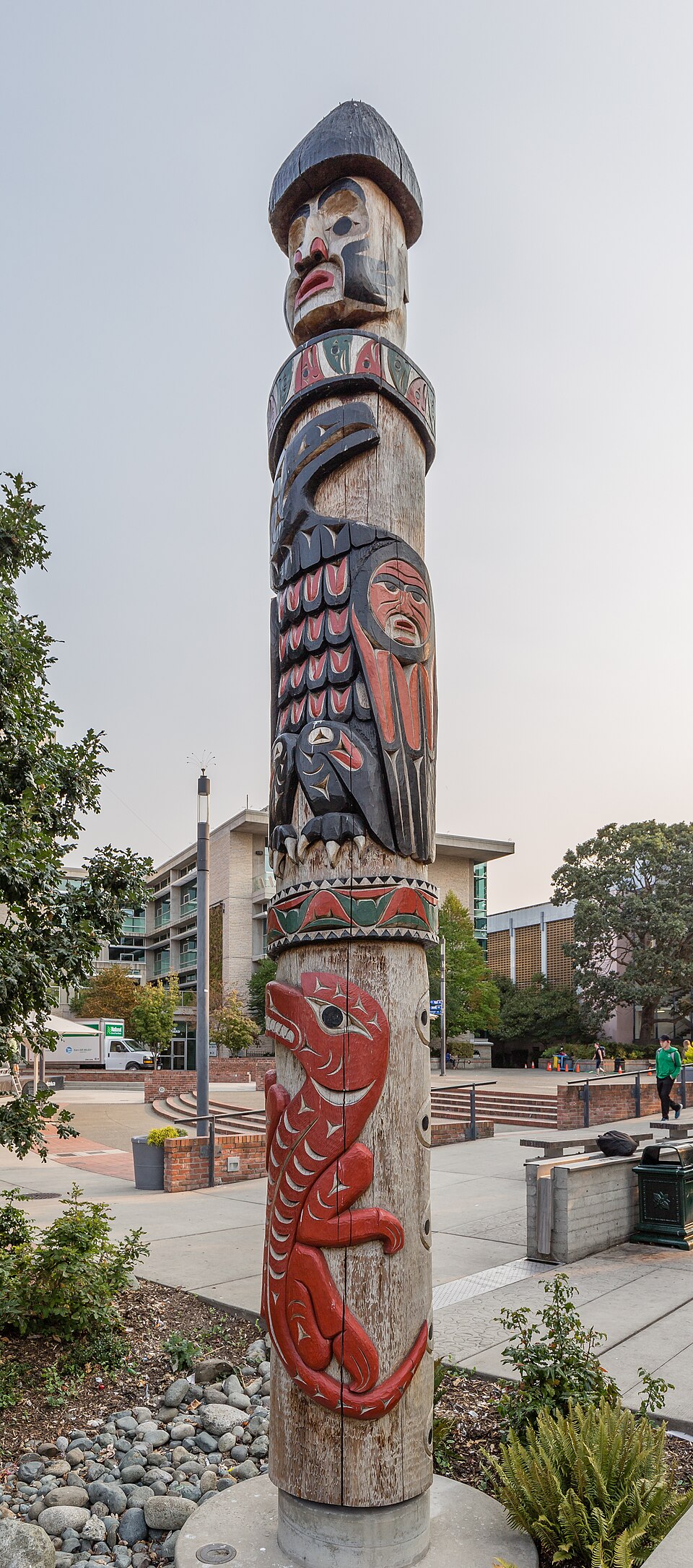
By the time Europeans arrived, there were 12 major language groups in what is now Canada, and more than 50 distinct languages. Within each group there were many nations. The peoples of the Eastern Woodlands, such as the Huron-Wendat, the Haudenosaunee, the Mi'kmaq, the Ojibwe, and the Algonquin, farmed corn, beans, and squash — the 'three sisters' — and lived in towns of hundreds or thousands of people. The peoples of the Great Plains, including the Blackfoot, the Plains Cree, and the Sioux, followed the great bison herds. The peoples of the Northwest Coast — the Haida, the Kwakwaka'wakw, the Tsimshian, and others — built great cedar houses, carved totem poles, and fished salmon so richly that their societies could support artists, chiefs, and great feasts called potlatches.
In the Arctic, the Inuit and their ancestors, the Thule people, built a life out of ice and sea. They hunted seals, whales, and caribou, travelled by kayak and dog team, and built snow houses — igloos — that could shelter a family through the polar night. Their tools, from the harpoon to the skin boat, were so well designed that European explorers later copied them to survive. And in the far east, the Beothuk lived on the island of Newfoundland, a people whose story ended in tragedy: by the early 1800s, disease and conflict with settlers had wiped them out, and the last known Beothuk, Shanawdithit, died in 1829.
Nations, laws, and trade
These were not simple societies. The Haudenosaunee — the Iroquois Confederacy of the Mohawk, Oneida, Onondaga, Cayuga, and Seneca nations, joined later by the Tuscarora — united under the Great Law of Peace, a constitution passed down by memory and wampum belts. Its council system, in which decisions needed the agreement of the member nations and clan mothers chose the chiefs, was one of the most thoughtful systems of government in the world at the time. When the confederacy was founded is debated: Haudenosaunee tradition dates it to the 1100s, while some historians place it in the 1400s or 1500s.
Trade tied the continent together long before Europeans arrived. Copper from the Great Lakes, shells from the Atlantic coast, obsidian from the west, and stone tools from a dozen quarries moved along trails and rivers for thousands of kilometres. Knowledge was kept in oral history, in ceremonies, and in wampum — belts of shell beads that recorded treaties and laws. When Europeans arrived, Indigenous peoples were not passive bystanders: they were guides, trappers, traders, and diplomats, and the newcomers depended on their knowledge to survive a single winter.
The Two Row Wampum, remembered in Haudenosaunee tradition from 1613, shows how Indigenous nations understood those first agreements: two purple rows on a white belt, two boats travelling side by side down the same river, in peace and respect, neither steering the other. It is still cited today as the model for how Canada and Indigenous nations should live together.
Contact, treaties, and the Indian Act
European contact changed everything. Diseases the peoples of the Americas had never met — above all smallpox — spread faster than any army. The fur trade, which began in the 1500s, made Indigenous trappers and traders essential partners, but it also pulled whole nations into European wars and markets. In 1763, after Britain took Canada from France, the Royal Proclamation said Indigenous land could only be bought by the Crown, through treaty — a rule that still shapes Canadian law.
After Confederation in 1867, Canada signed the Numbered Treaties, eleven agreements between 1871 and 1921 covering the Prairies and the north, in which First Nations shared land in return for reserves, payments, and promises of schools and farming help. Whether both sides understood those promises the same way is still argued in courts today. Then, in 1876, the federal government passed the Indian Act, a law that defined who counted as an 'Indian', created reserves and band councils, and put reserve land and band money under federal control. Its stated aim was assimilation: officials said openly that First Nations would eventually disappear as distinct peoples. The Act is still in force, and many First Nations describe living under a colonial law their own people did not write.
The hardest chapter was the residential schools. About 150,000 First Nations, Inuit, and Metis children were taken to church-run, government-funded schools designed to remove them from their families and cultures. Attendance was made compulsory in the 1880s. Children were punished for speaking their own languages, and many suffered neglect and abuse. The last federally run school, Gordon's in Saskatchewan, closed in 1996. The Indian Residential Schools Settlement Agreement of 2007 paid compensation to survivors and created the Truth and Reconciliation Commission, which heard from more than 6,000 witnesses and reported in 2015. Its 94 Calls to Action cover child welfare, education, health, justice, and language — and its report concluded that the system amounted to cultural genocide. In 2021, the first National Day for Truth and Reconciliation was marked on 30 September.
Survival and renewal
Yet Indigenous peoples survived, and the last sixty years have been a story of rights won back. First Nations people won the federal vote in 1960. In 1973, the Supreme Court's Calder decision recognised that Aboriginal title to land had existed before Europeans arrived. Section 35 of the Constitution Act, 1982, recognised and affirmed existing Aboriginal and treaty rights. In 1999, Nunavut was created as Canada's newest territory, a homeland where the Inuit form the majority and govern themselves. Land claims and self-government agreements have followed across the country, and Indigenous languages — more than 50 of them — are being taught again to a new generation.
Today there are more than 600 First Nations communities in Canada, and Inuit Nunangat — the Inuit homeland — stretches across the Arctic. The Metis, a distinct people who grew from First Nations and European fur-trade families, with their own language, Michif, and their own flag, won recognition of their rights in the courts too. Indigenous art, from totem poles to throat singing to the films and books of a new generation, is now part of how the whole world sees Canada. The history of Canada starts here, with peoples who were already home — and who never left.
| Milestone | Date | What happened |
|---|---|---|
| First peoples reach North America | 12,000+ years ago | Migration from Asia across the Bering land bridge |
| Thule ancestors of the Inuit arrive in the Arctic | c. 1000 | Inuit culture spreads east across the Arctic |
| Haudenosaunee Confederacy founded | 1100s–1500s (debated) | Five nations unite under the Great Law of Peace |
| Two Row Wampum | 1613 (tradition) | Haudenosaunee–Dutch agreement of two peoples side by side |
| Royal Proclamation | 1763 | Indigenous land to be bought only by the Crown, by treaty |
| Indian Act passed | 1876 | Federal control over status, reserves, and band governments |
| Numbered Treaties | 1871–1921 | Eleven treaties across the Prairies and the north |
| Indigenous peoples win the federal vote | 1960 | First Nations gain the vote without giving up status |
| Calder decision | 1973 | Supreme Court recognises Aboriginal title |
| Section 35, Constitution Act | 1982 | Aboriginal and treaty rights recognised and affirmed |
| Last residential school closes | 1996 | Gordon's school in Saskatchewan closes |
| Nunavut created | 1999 | Canada's newest territory, an Inuit homeland |
| Truth and Reconciliation report | 2015 | 94 Calls to Action; system called cultural genocide |
Sources: The Canadian Encyclopedia, 'Indigenous Peoples in Canada'; Encyclopaedia Britannica, 'Canada: Precontact aboriginal history'; Discover Canada (Government of Canada); Truth and Reconciliation Commission of Canada, final report (2015); Statistics Canada, 2021 Census. Checked 29 November 2026.